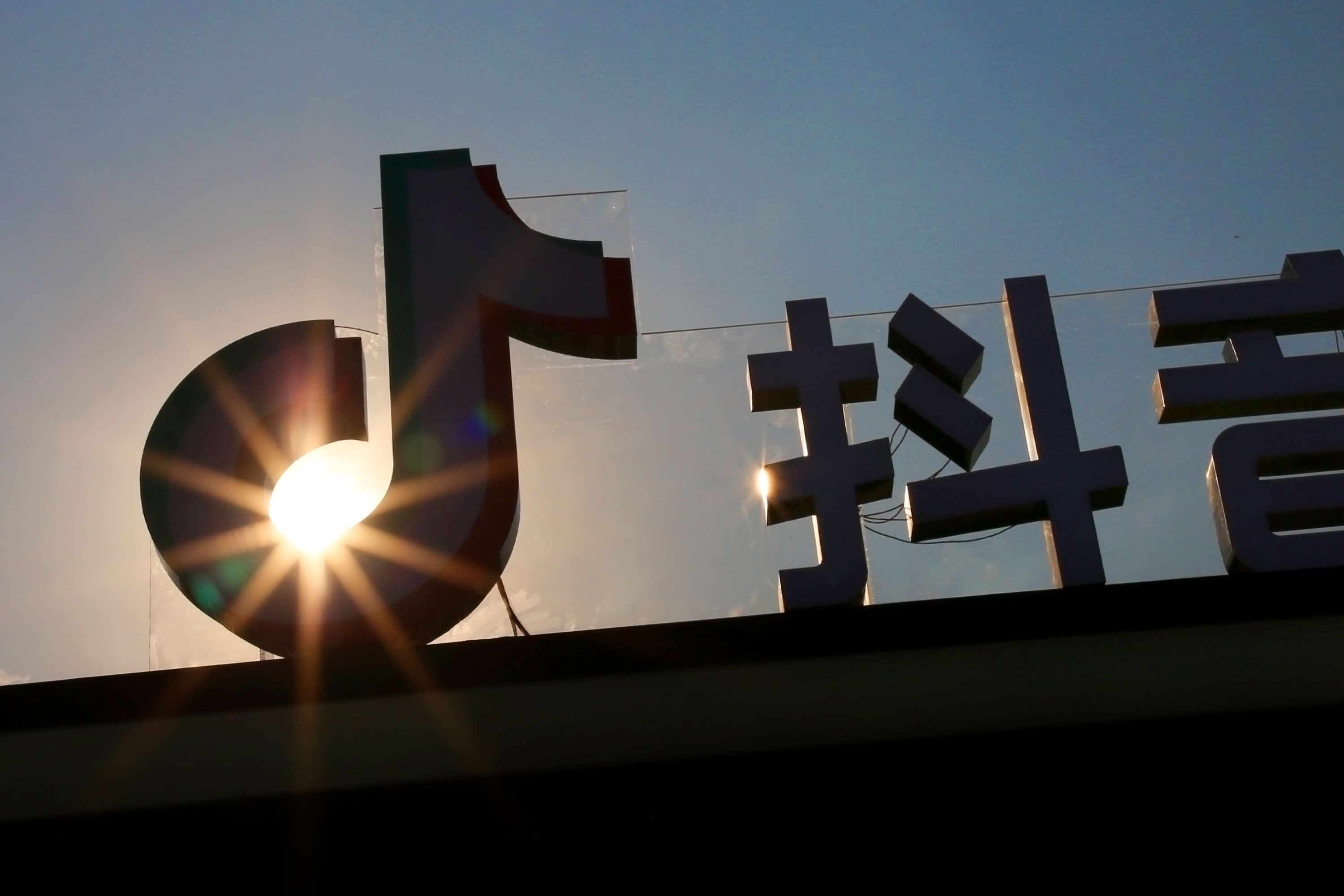
A symbol of TikTok (Douyin) is pictured at The Place shopping mall at dusk on August 22, 2020 in Beijing, China.
VCG | Visual China Group | Getty Images
GUANGZHOU, China — ByteDance has launched a new payment service within Douyin, the Chinese version of short-video sharing app TikTok.
Douyin users can choose Douyin Pay to make purchases within the short-video app. Creators usually sell items or merchandise related to their content.
“The set-up of Douyin Pay … is to supplement the existing major payment options, and to ultimately enhance user experience on Douyin,” ByteDance said in a statement. ByteDance owns both Douyin and TikTok.
Indeed, Douyin already offers payment options from Alibaba affiliate Ant Group’s Alipay and Tencent’s WeChat Pay, the two dominant mobile payment apps in China.
Together, Alipay and WeChat Pay account for more than 90% of the mobile payments market in China, according to iResearch.
Both payment services are available within apps but also at physical stores where customers can scan barcodes to purchase items. This is different to Douyin Pay which will just be available within the Douyin app.
Douyin’s payment system is operated by Wuhan Hezhong Yibao Technology, a company ByteDance purchased around two years ago. Users will need a Chinese bank account to use Douyin Pay.
The latest push into both e-commerce and financial technology, or fintech, highlights ByteDance’s desire to expand beyond social networking. This has included forays into mobile gaming, a search engine and music streaming.