“Just one in 10 adults meet the federal vegetable recommendations,” reported the Centers for Disease Control and Prevention in one of its Morbidity and Mortality Weekly Reports. “As a result, we’re missing out on essential vitamins, minerals, and fiber,” noted the study’s lead author, adding, “This puts [you] at risk for chronic diseases like diabetes and heart disease.”
Are you one of 90% that aren’t getting enough vegetables in your diet? Is it something you’re committed to changing? If so, these professionals’ tips on storing and preparing vegetables can be your resource for healthier eating now and year-round. (A companion article in two weeks will focus on fruits and outdoor cooking.) Wellness design can support your healthy food goals.
Mom Was Right
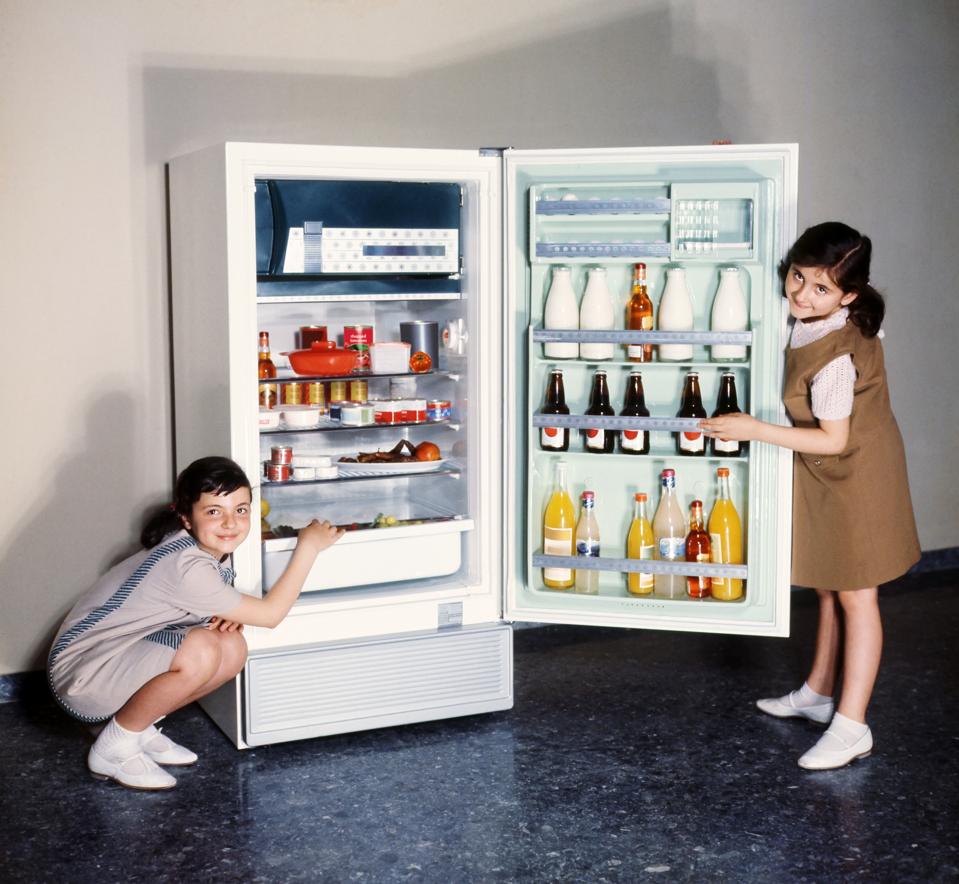
Mom was right about the importance of eating your vegetables, but her refrigerator didn’t have … [+]
getty
“Eat your vegetables” was a mealtime command millions of American kids grew up hearing. It was good advice too, according to registered dietitian and fitness chain Life Time’s weight loss program director, Anika Christ. “Produce naturally provides some of the best sources of critical nutrients (fiber, vitamins, minerals, antioxidants and phytonutrients) that are responsible for so many metabolic processes in the body,” she points out.
Most clients are aware of their importance, she believes, but need help finding ways to incorporate them into their meal planning and knowing the best ways to prepare them. Otherwise, these well-intentioned purchases often spoil before they’re cooked or eaten. Add in outdated, underperforming appliances and thousands of dollars and nutritional opportunities are potentially wasted.
Optimizing Produce Preparation
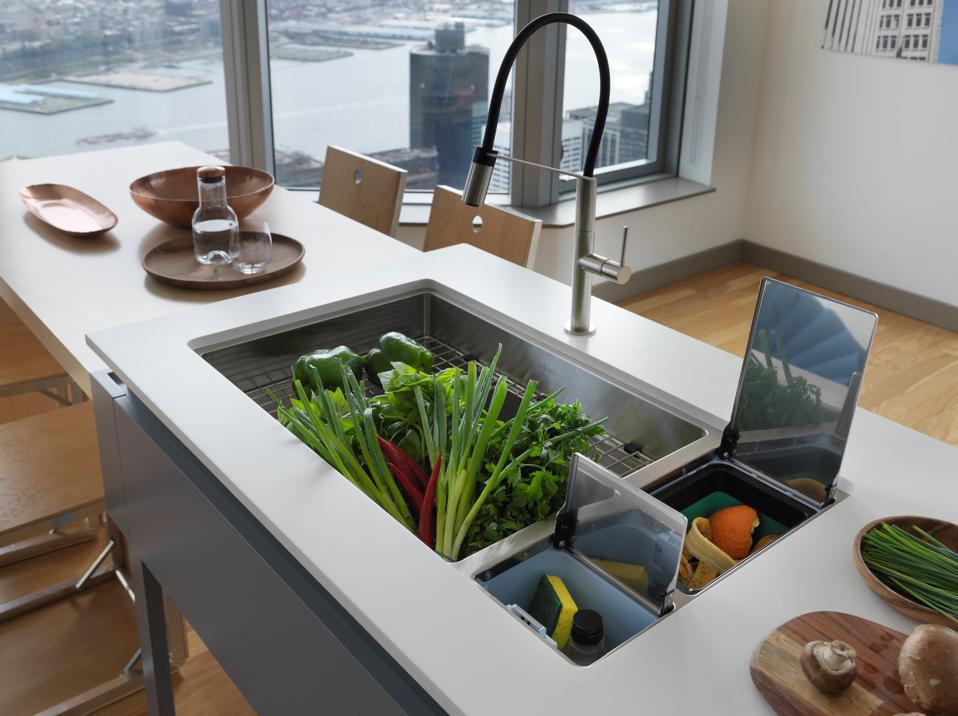
An optimized prep area can make vegetable cleaning and chopping more convenient.
Franke Kitchen Systems // Wellness by Design (Tiller Press, 2020) (c) J. Gold
Nutrients can be lost in the cleaning and preparation of produce if you’re not careful, Christ comments. “For soaking, you want to stick to leafy greens, while more porous veggies like carrots or celery you’ll want to rinse instead. I also like to encourage my clients to keep skins on when possible,” pointing to the extra nutrition and fiber from cucumbers and carrots in particular.
A hands-free kitchen faucet and pro-style chef sink with accessories can help make produce preparation easier and more convenient. The hands-free feature means you won’t be spreading foodborne illnesses from raw meats to produce, or seasonal viruses between family members.
Pro-Inspired Space Planning
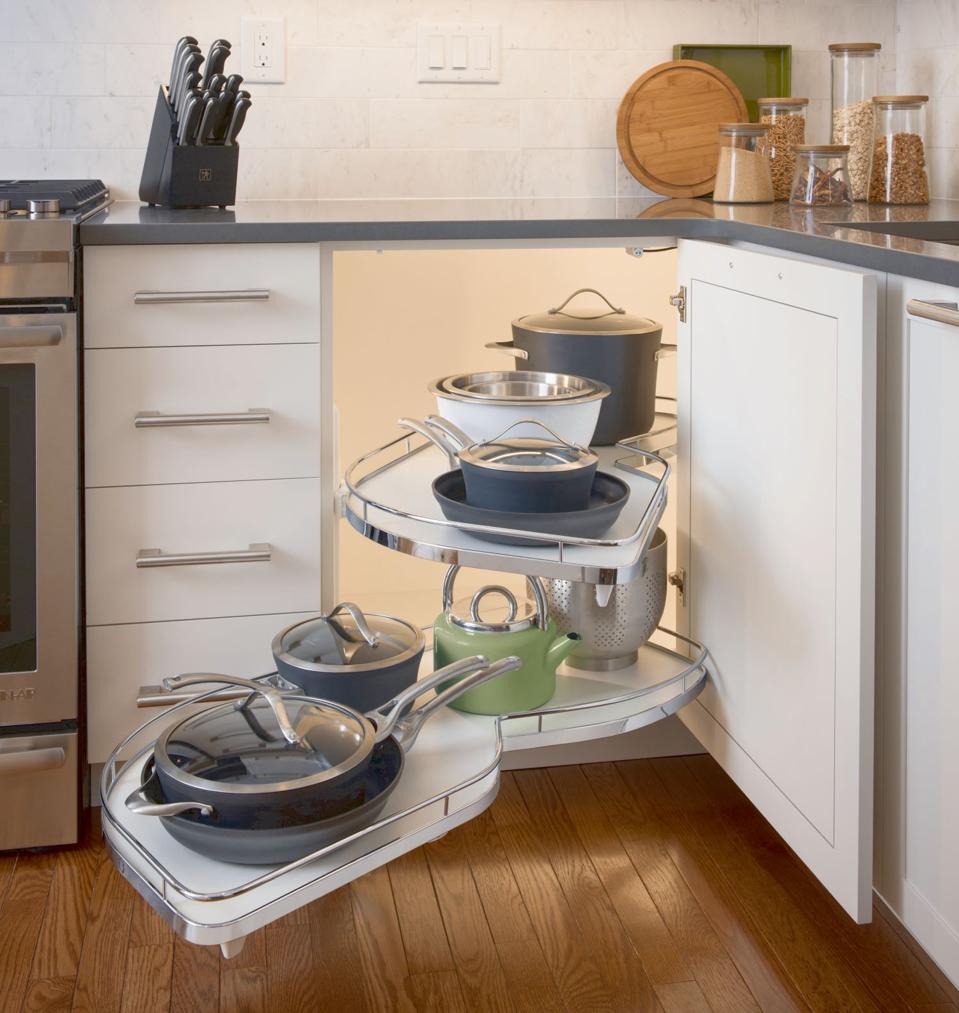
Storing your cooking tools close to your cooking appliances makes meal prep faster and more … [+]
Photo Courtesy of Kesseböhmer/Kitchen Design by Dee Maher // Wellness by Design (Tiller Press, 2020) (c) J. Gold
When it comes to arranging kitchen spaces, professional chef, appliance trainer and regenerative food entrepreneur Bridget Bueche is inspired by what she calls the logic of a commercial kitchen: Receiving ingredient areas, prep space, cooking features, storage capacity for ingredients and tools, plus a cleanup area all in a sequential order.
“I love vegetable prep centers as they consider space to clean, prepare and cook.” They can be designed into a kitchen — potentially on an island opposite the refrigerator, or equipped with refrigerator drawers — for all of the functions she cites and for storing cooking tools like small appliances, pots, pans, cutting boards and utensils as close as possible to where they’ll be used. (You might also plan your storage areas for left- or right-handed usage, depending on your needs.)
For those who’ll be spending prolonged hours in the kitchen, Bueche suggests cushioned mats. Low maintenance countertops like porcelain slab, engineered stone of hybrids will also make your cooking experience more convenient, as you won’t be as worried about staining if your produce leaks onto them and you don’t notice as quickly.
Enhancing Produce Preservation
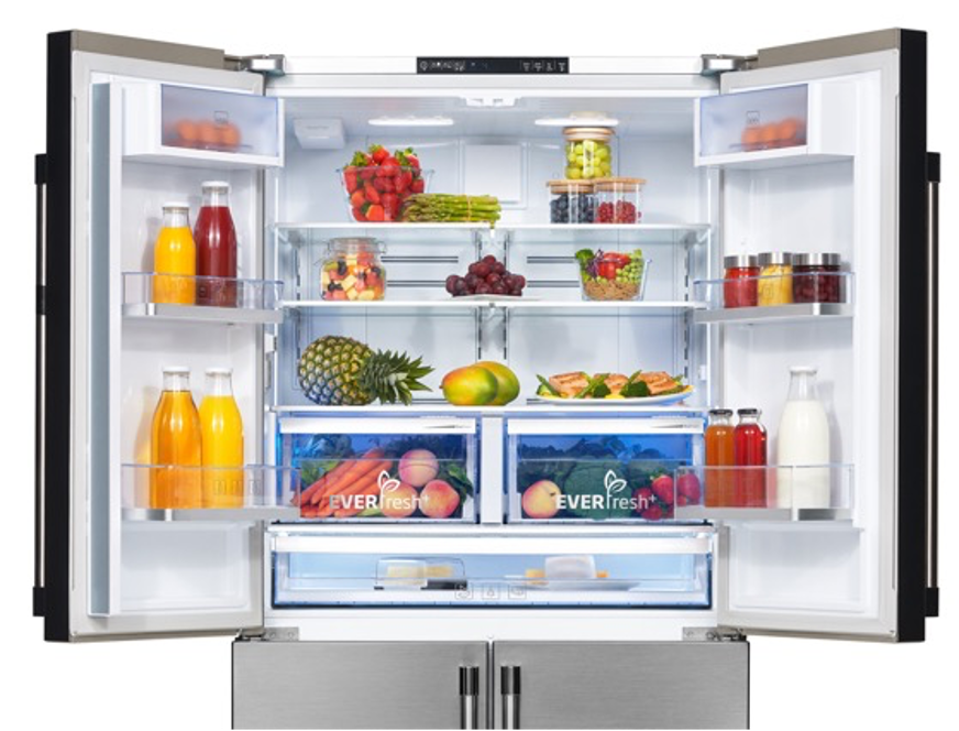
European manufacturer Beko is backing up the produce preservation potential of its refrigerators’ … [+]
Beko
One question people often have is where to store fruits and vegetables in their kitchens?