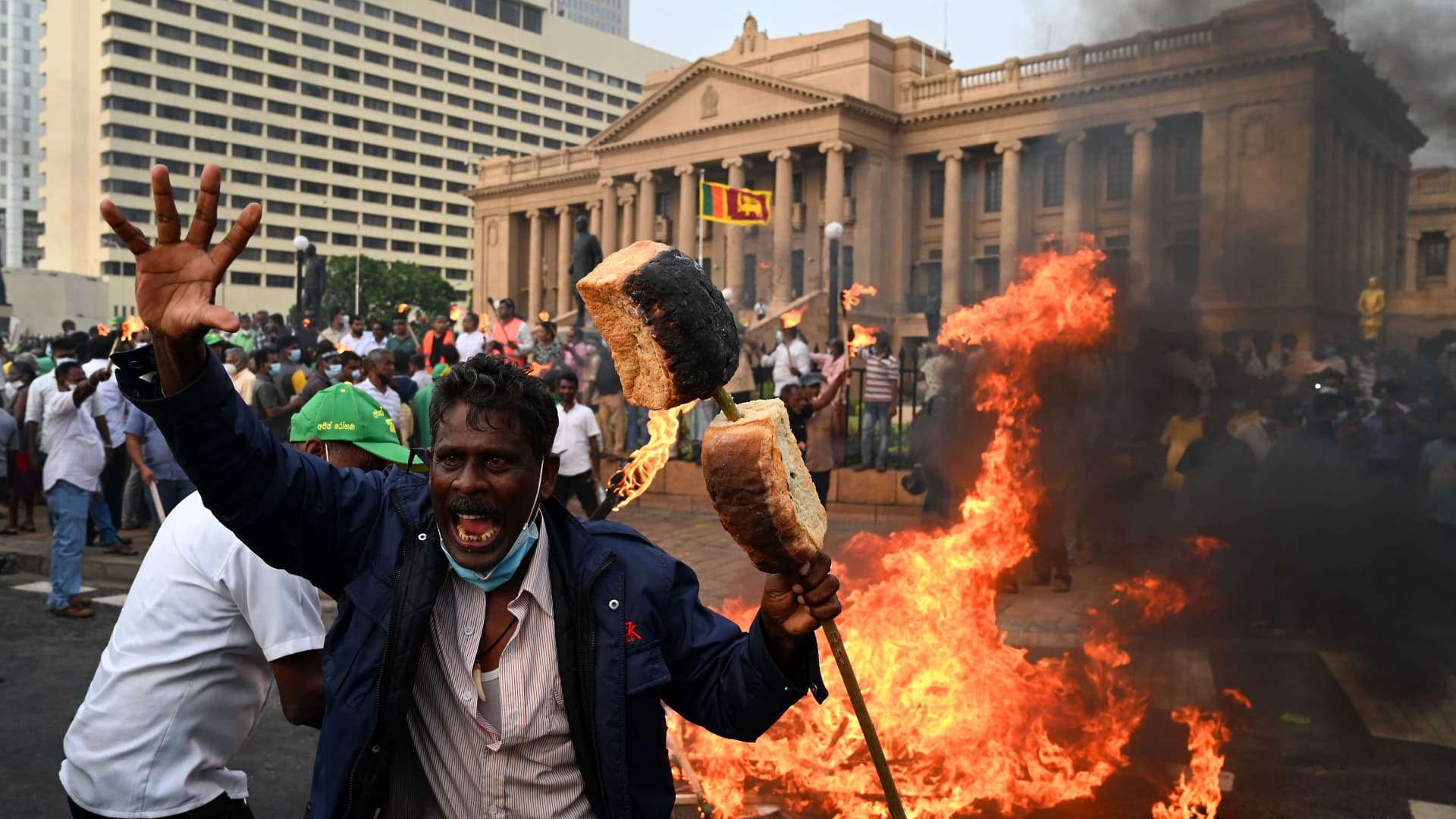
During the 2010s, Sri Lanka had one of the fastest-growing economies in Asia.
Things took a 180-degree turn at the end of the decade as the country’s economy stumbled. In May 2022, the government defaulted on its debt for the first time in history.
As inflation continued to spiral out of control, with a massive shortage of food, fuel and medicine for the country’s 22 million people, Sri Lankans took to the street, forcing the president, Gotabaya Rajapaksa, to resign and flee the country.
Even though Sri Lanka has a new president, Ranil Wickremesinghe, protests continue. Inflation has risen past 50% — and could hit 70% — making it harder for people to survive.
Many experts believe that Sri Lanka’s story is a warning sign for emerging markets.
“Sri Lanka is facing its worst economic collapse in its modern history,” said Sumudu W. Watugala, assistant professor of finance at the Kelley School of Business at Indiana University. “This is due to long-standing structural weaknesses exacerbated by a series of idiosyncratic shocks. Sri Lanka’s crisis can be a warning sign to other developing nations because it’s a classic emerging market crisis in many ways.”
So what does Sri Lanka’s economic crisis signal about similar economies and emerging markets? Watch the video to learn about more risks involved in emerging markets, how Sri Lanka’s economy collapsed and the country’s path forward.