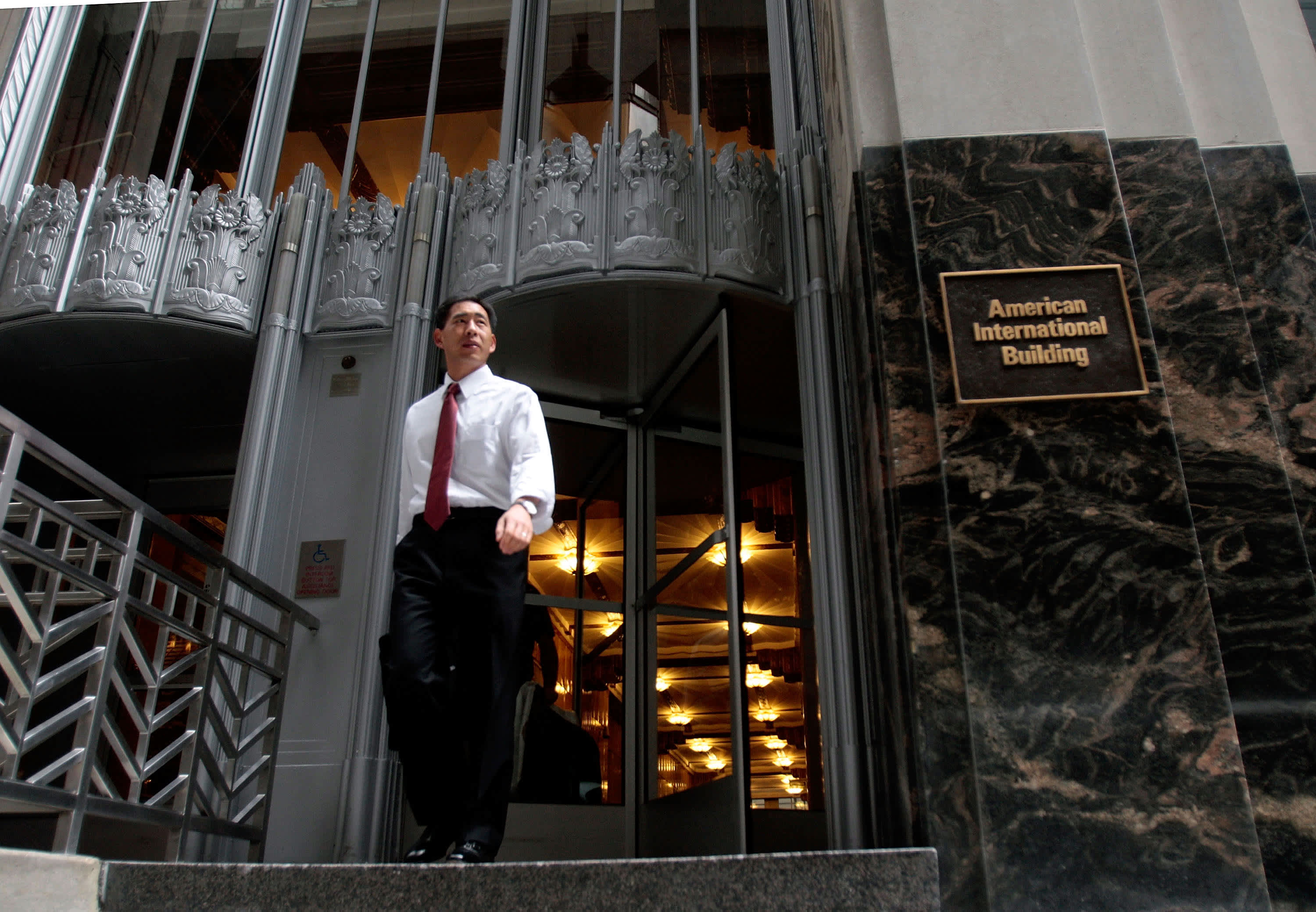
A man exits the American International Building, world headquarters of American International Group (AIG).
Chris Hondros | Getty Images
Insurer American International Group on Monday posted a 56% fall in quarterly adjusted earnings, spurred partly by higher catastrophe losses and lower private-equity returns.
Adjusted after-tax income attributable to AIG common shareholders fell to $571 million in the second quarter ended June 30, from $1.3 billion a year earlier.
Excluding items, AIG earned a profit of 66 cents per share compared with $1.43 per share a year earlier, exceeding Factset expectations of 50 cents per share, the company said.
AIG, one of the largest insurers in the United States, posted an underwriting loss of $343 million in its general insurance business, compared with a $147 million profit a year earlier.
The loss included $674 million of catastrophes, net of reinsurance, partly reflecting $458 million related to Covid-19 and $126 million for civil unrest claims.
A decline in travel during the pandemic affected AIG’s travel insurance business.
Net adjusted investment income dropped $537 million from a year ago to $3.2 billion. Performance was hurt by $276 million in private-equity losses compared with $238 million in private-equity income a year ago which included a large gain from one of the holdings.
AIG’s general insurance accident year combined ratio excluding changes from losses incurred in past years, was 94.9 for the quarter, compared with 96.1 a year ago.
AIG has been using the metric to gauge the success of a turnaround plan launched by Chief Executive Officer Brian Duperreault upon taking the insurer’s helm in 2017.
A ratio below 100 means the insurer earns more in premiums than it pays out in claims.
Gross premiums written fell 2% to $8.47 billion in the general insurance business.
AIG’s life and retirement unit posted $881 million in adjusted pretax income compared with $1.0 billion a year ago, driven partly by private-equity losses and deaths from Covid-19.