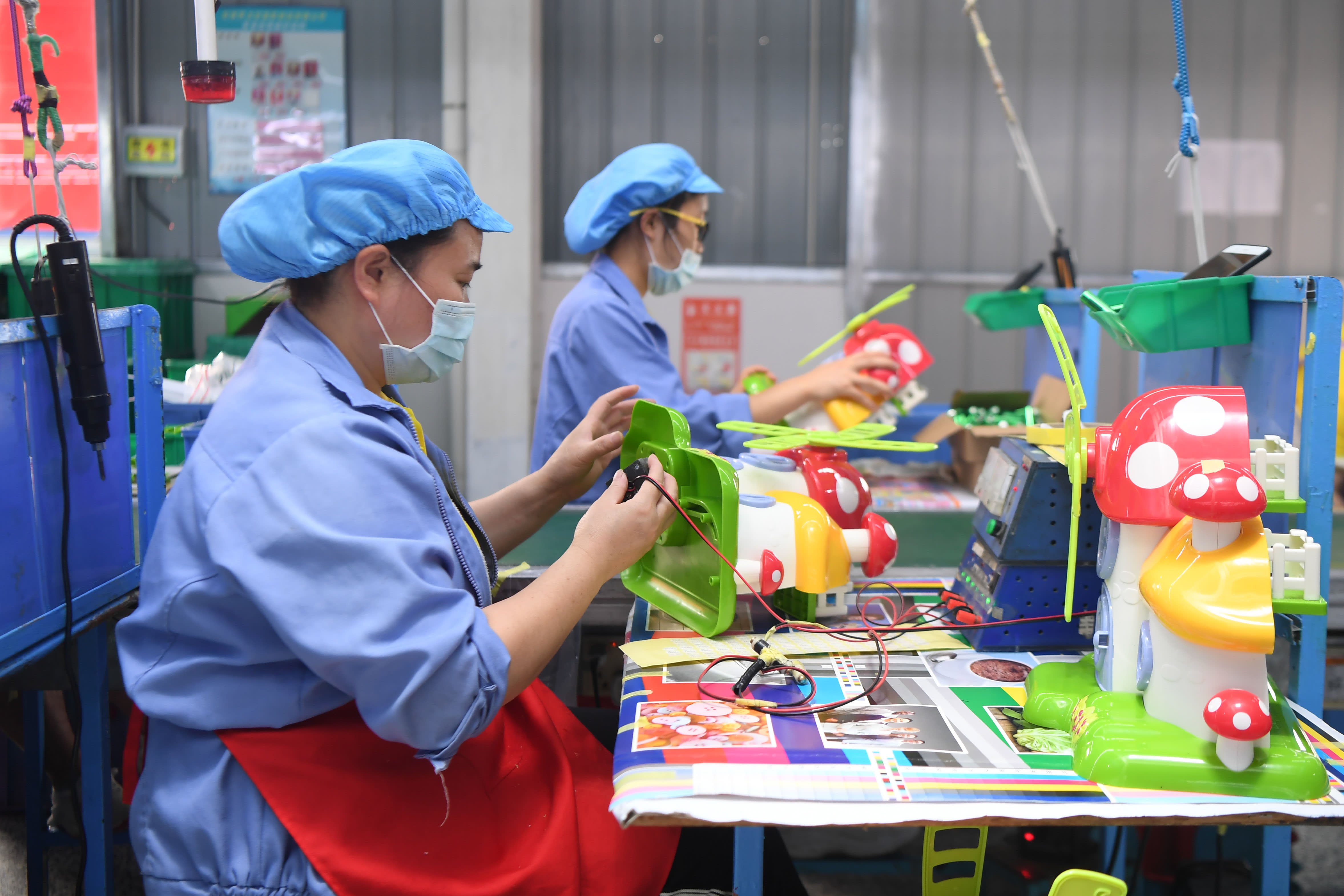
Workers make toys at a plastic product factory in Zhangjiajie, central China’s Hunan Province, May 27, 2020.
Xue Yuge | Xinhua News Agency | Getty Images
A private survey showed manufacturing activity in China expanded for the month of May.
The Caixin/Markit Manufacturing Purchasing Manager’s Index came in at 50.7 for May. PMI readings above 50 indicate expansion, while those below that level signal contraction.
Analysts polled by Reuters had expected the May PMI number to come in at 49.6 compared to the April reading of 49.4.
Data suggested that production recovered faster than demand, and the rate of expansion for output was at its fastest since January 2011. Meanwhile, demand was subdued with total new work falling in May.
“May data signalled a further increase in output following February’s record decline, with firms widely mentioning the resumption of works due to an easing of COVID-19 related measures,” said Caixin and IHS Markit said in a joint statement.
“Data indicated that the fall was largely driven by weaker external demand, as many nations faced strict measures to stop the spread of the pandemic including company closures, leading new export orders to contract at a historically sharp rate,” said Caixin and IHS Markit.
On Sunday, China posted the official manufacturing Purchasing Manager’s Index which came in at 50.6, according to the National Bureau of Statistics. This was compared to 50.8 in April.
The Caixin/Markit survey features a bigger mix of small- and medium-sized firms. In comparison, the official PMI survey typically polls a large proportion of big businesses and state-owned companies.
This is breaking news. Please check back for updates.