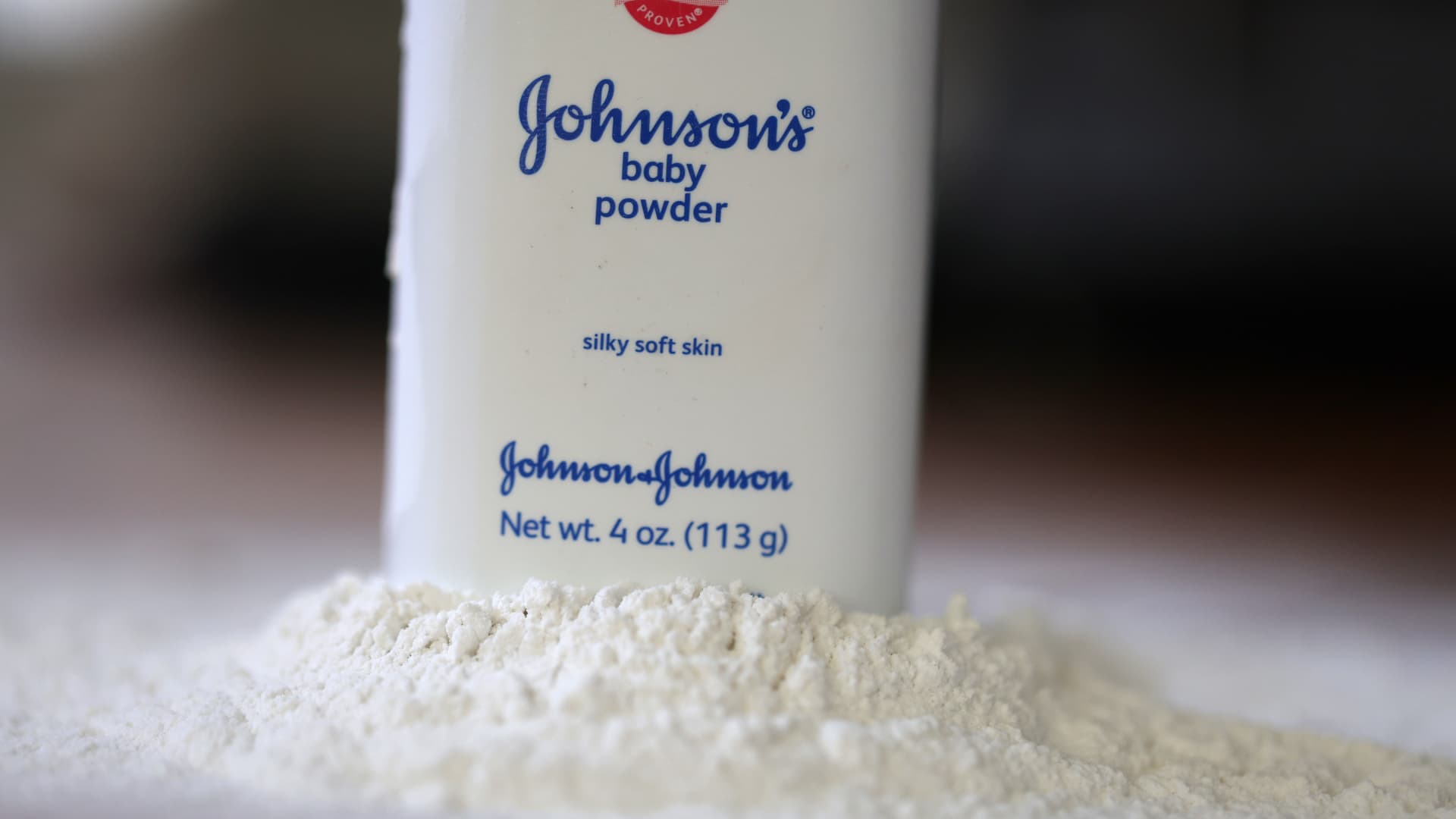
A federal bankruptcy judge on Friday rejected Johnson & Johnson‘s second attempt to resolve tens of thousands of lawsuits alleging the company’s talc baby powder and other talc-based products caused cancer.
J&J in 2021 offloaded those talc liabilities into a new subsidiary, LTL Management, and immediately filed for Chapter 11 bankruptcy protections.
Judge Michael Kaplan in Trenton, New Jersey, said in an opinion that LTL Management’s second bankruptcy must be dismissed because the subsidiary was not in ”imminent” or “immediate financial distress.” A U.S. appeals court in April dismissed the first bankruptcy attempt over the same reason.
The decision jeopardizes J&J’s proposed $8.9 billion settlement that would stop new lawsuits from being filed. The company previously said more than 60,000 claimants have already committed to voting in favor of the plan.
“LTL commenced its bankruptcy case in good faith and in strict compliance with the Bankruptcy Code,” J&J said in a statement.
“The Bankruptcy Code does not require a business to be engulfed in ‘flames’ to seek a reorganization supported by the vast majority of claimants,” said Erik Haas, J&J’s worldwide vice president of litigation in the statement.
J&J contends that research and clinical evidence demonstrates that its talc products remain safe.