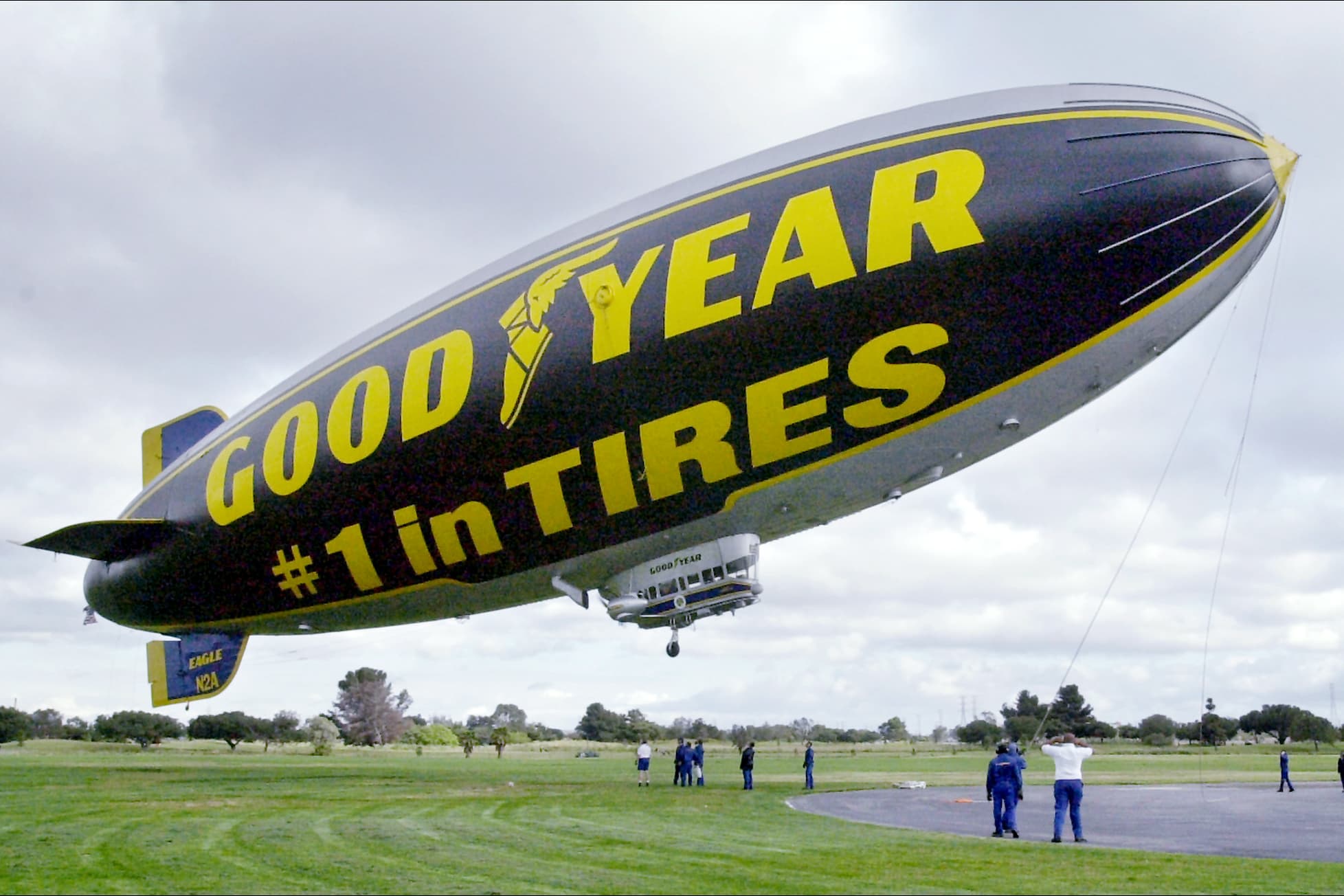
Blimps were once at the forefront of aviation innovation.
They took passengers across oceans in luxurious cabins, and they protected U.S. warships in open seas. But as the airplane quickly took over the age of aviation, blimps and airships faded from widespread use.
“Everybody talks about the Hindenburg crash being the end of the airship,” said Dan Grossman, aviation historian, in an interview with CNBC. “All it did was speed up the end.”
Now, airships are often just used for advertising or aerial broadcasting, which is exactly how Goodyear utilizes its fleet of airships. In fact, there are only 124 pilots with a rating to fly an airship in the United States, according to the FAA.
There are companies looking to bring back blimps as sustainable ways to transport cargo. French company Flying Whales is working on an airship design that would allow the aircraft to load and unload up to 60 tons of cargo without ever having to land, and it has some big investors, including the government of Quebec and the Aviation Industry Corporation of China.
“We’re building a segment of the transport industry that doesn’t exist … that has never existed,” said Romain Schalck, Flying Whales communication manager, in an interview with CNBC.
Watch the video above to learn more about how airships pioneered air travel and how they could return to the skies.